
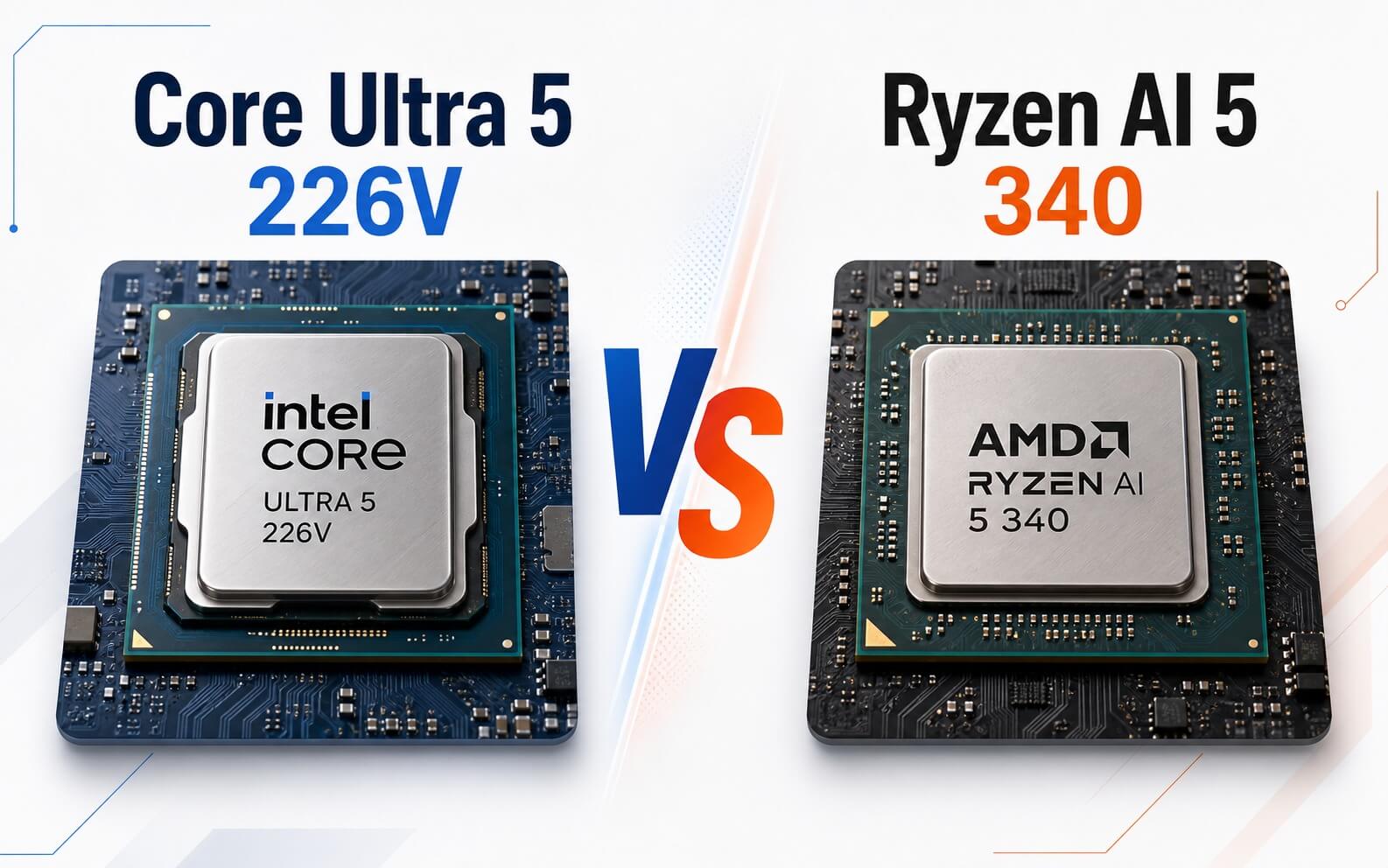
Core Ultra 5 226V and Ryzen AI 5 340 are both next-generation Copilot+ chips equipped with powerful NPUs, but the way these two chips achieve performance is completely different. Many people think that if Intel has stronger single-core performance, it must also lead in multi-core; however, in reality, Ryzen AI 5 340 leads by nearly 10% in multi-threading according to CPUMark benchmarks, while the 226V consumes significantly less power with a TDP of only 17W compared to 28W. Both chips target different types of users despite both being labeled as "thin and light AI" devices.
Where do Core Ultra 5 226V and Ryzen AI 5 340 differ?
Looking at the specifications, the two chips seem similar: both are from 2026, both meet Copilot+ standards, and both target the thin and light laptop segment. But diving deeper into the architecture reveals clear differences. The Core Ultra 5 226V uses the Lunar Lake architecture on a 3nm process, featuring a design of 4 Performance cores + 4 Efficient cores, without traditional Hyper-Threading, and an L3 cache of only 8MB. The AMD 340 uses Krackan Point based on Zen 5, on a 4nm process, with 6 real cores and SMT for 12 threads, and a cache of up to 22MB.
| Specifications | Intel Core Ultra 5 226V | AMD Ryzen AI 5 340 |
|---|---|---|
| Architecture | Lunar Lake, 3nm | Krackan Point / Zen 5, 4nm |
| Cores / Threads | 4P + 4E / 8 threads | 6 / 12 threads |
| Boost Clock | up to 4.5 GHz | 2.0 - 4.8 GHz |
| TDP (base / turbo) | 17W / 37W | 28W / 54W |
| L3 Cache | 8MB | 22MB |
| NPU TOPS | 40 TOPS | 50 TOPS |
| Copilot+ | Compliant | Compliant |
| iGPU | Intel Arc Graphics 130V | AMD Radeon 840M |
| CPUMark Multi-core | 17,864 | 19,590 |
| CPUMark Single-core | 3,766 | 3,699 |
A downside that needs to be stated clearly: the 226V has fewer cores and a significantly smaller cache. For workloads requiring many parallel threads like rendering, compiling code, or heavy data processing, the Intel chip is at a disadvantage. Conversely, a base TDP of only 17W (OEM range from 8-37W) helps the machine have better battery life and run cooler under normal conditions. The AMD 340 has a base TDP of 28W, reaching up to 54W when boosting heavily.
CPU, AI, and Integrated Graphics Performance: Which chip is stronger for thin and light laptops?
According to real-world data from cpubenchmark.net, the Ryzen AI 5 340 leads by about 9.7% in multi-core (19,590 vs 17,864) compared to the Core Ultra 5 226V. Notebookcheck confirms this gap is around 10% in synthetic multi-core conditions. In single-core, it's the opposite: the 226V is 1.8% ahead (3,766 vs 3,699), a difference so small it is almost imperceptible in actual use. Regarding Cinebench R23 and Geekbench 6, since official data for both has not been confirmed, Hung Phat will not provide estimated figures.
Regarding AI NPU, the AMD 340 has a slight advantage with 50 TOPS compared to the 40 TOPS of the 226V. In practice using Copilot+ on Windows 11, both can run features like Recall, Live Captions, or AI image processing in Adobe Lightroom. The 10 TOPS difference is mainly significant when running multiple heavy AI tasks simultaneously, or when future software exploits the NPU more deeply. Currently, both chips are equal in terms of daily AI experience.
In terms of integrated graphics, the Intel Arc 130V is clearly superior to the Radeon 840M at 1080p Low resolution with eSports titles like Valorant, CS2, or League of Legends. The Arc 130V is ranked in the mid-high tier, while the 840M is in the mid tier. Neither is sufficient for heavy AAA games at high settings. If you play games, even light ones, the 226V laptop provides a slightly smoother experience at the same settings.
Should you choose a Core Ultra 5 226V or Ryzen AI 5 340 laptop in the 15-30 million VND range?
The answer depends on what you use the machine for. If your primary work is office tasks, web browsing, video conferencing, document editing, or light photo editing, both chips are more than sufficient. The 9.7% multi-core difference is not clearly reflected in those tasks. In this case, choosing based on form factor and a suitable screen is more important than the chip.
Conversely, if you frequently process 4K video, compile large projects, run virtual machines, or perform 3D rendering for long periods, the 10% multi-core difference of the 340 adds up to several minutes saved each day. In return, a machine with the AMD 340 chip may run hotter and drain the battery faster at peak load due to the higher TDP. Hung Phat's real-world observation of many devices shows that the 226V chip typically maintains more stable temperatures in ultra-thin chassis because its base TDP is significantly lower.
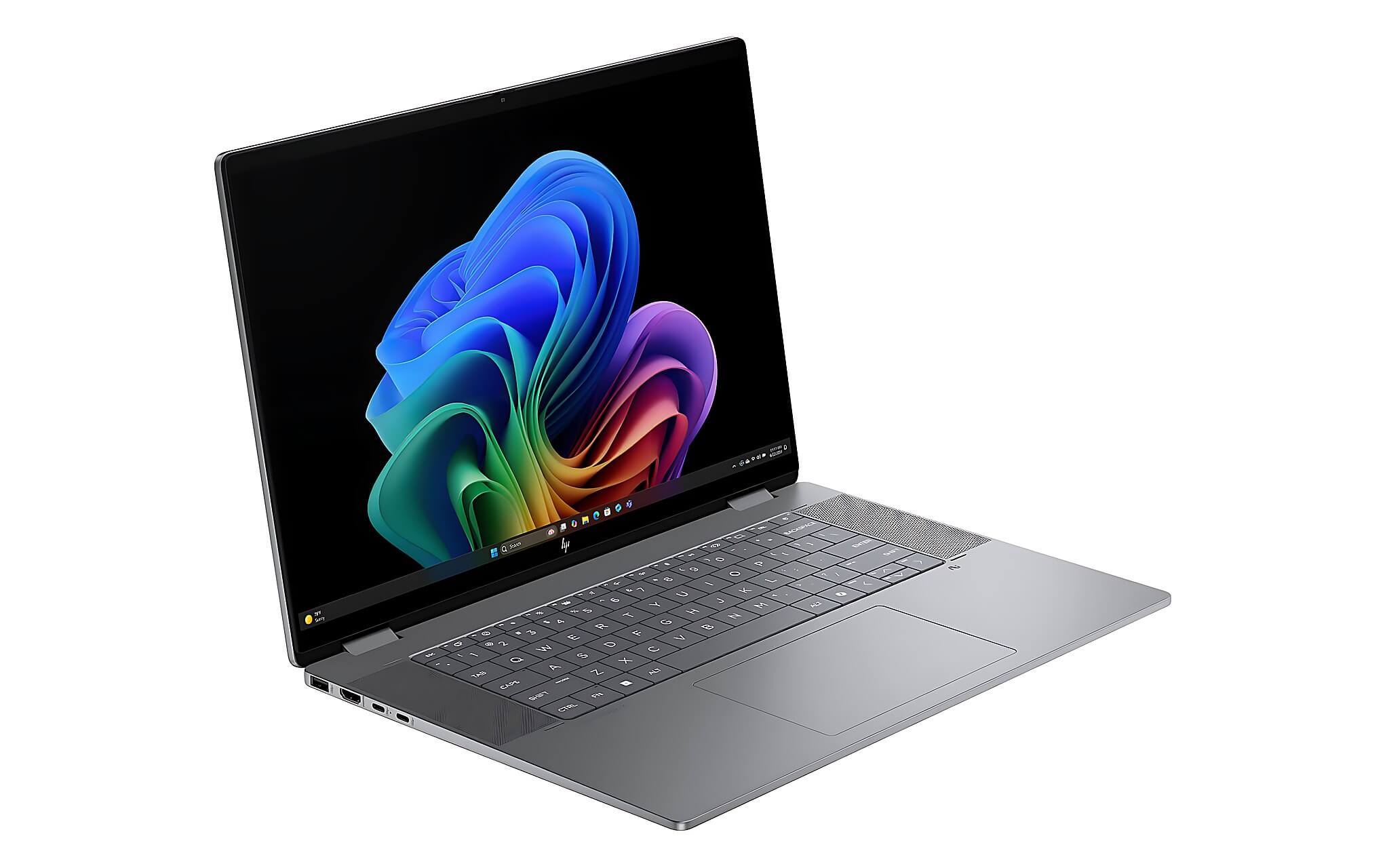
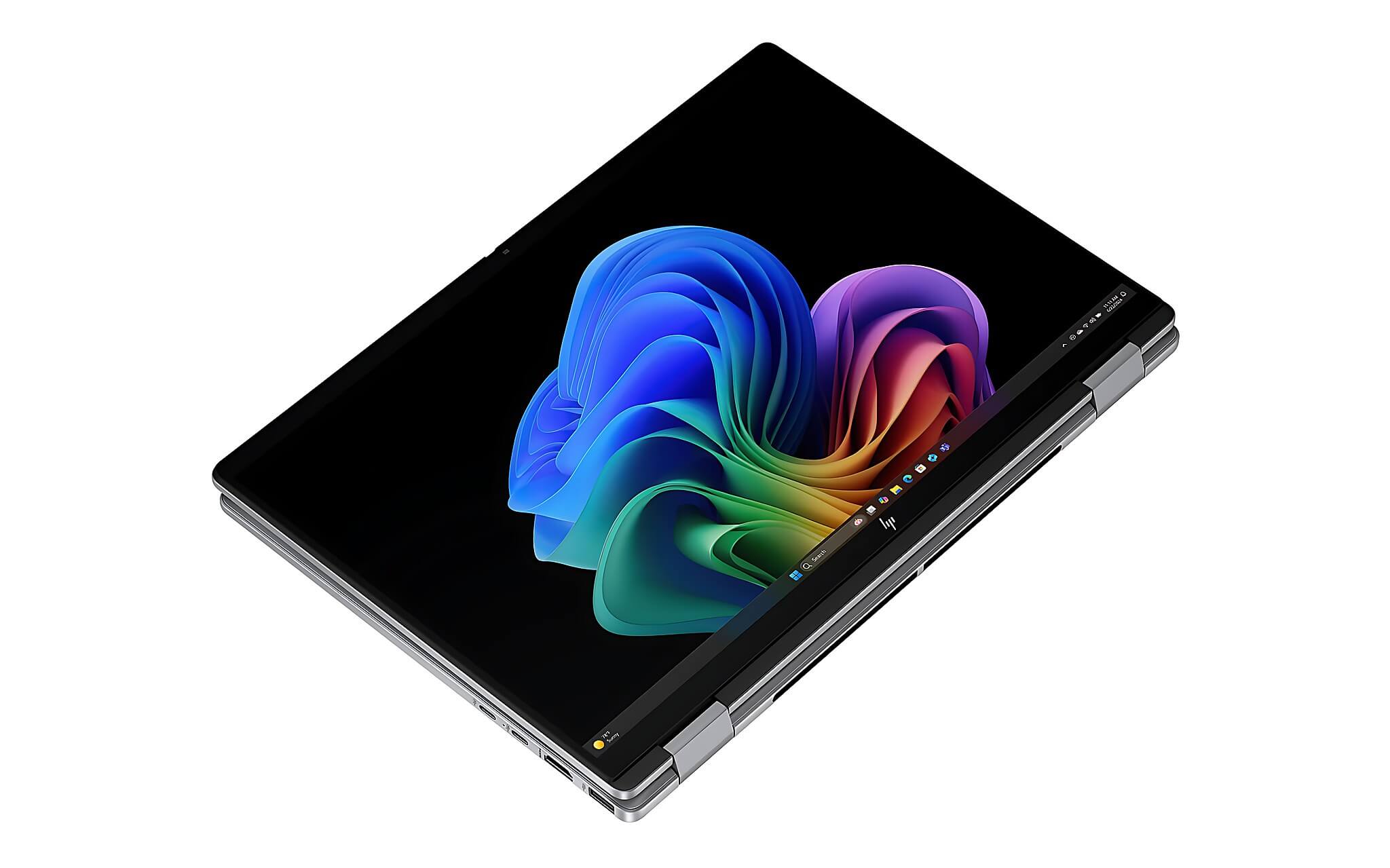
At Hung Phat, all three models are currently in stock. The HP OmniBook X Flip Next Gen AI 14 gives you the choice between both chips, with 16GB LPDDR5x RAM and a PCIe Gen4 SSD, priced around 15-25 million VND. The HP OmniBook X Flip Next Gen AI 16 offers similar chip options but with a larger screen, suitable if you need more workspace. If you prioritize the AMD 340 with a 16-inch 16:10 screen for a lightweight mobile workstation, the DELL Pro 16 Plus PB16255 AMD is a worthy consideration in the 20-30 million VND range, equipped with AMD Ryzen AI 5 Pro 340, Radeon 840M, 16GB RAM, and a 512GB PCIe Gen4 SSD. You can visit us in Ho Chi Minh City to see them in person or message Hung Phat for further consultation on each model.
In summary: if you do office work and need good battery life and a cool machine, the 226V is the more reasonable choice. If you need higher multi-core performance for heavy tasks and accept slightly faster battery drain under full load, the 340 is more suitable. Neither is a wrong choice; it just depends on the user.
Frequently Asked Questions (FAQ)
Which chip is faster for video editing and photo rendering: 226V or Ryzen AI 5 340?
For heavy rendering and video encoding workloads, the Ryzen AI 5 340 has a clear advantage thanks to its 6 real cores with 12 threads and 22MB cache. According to CPUMark benchmarks, the AMD 340 leads by about 9.7% in multi-core compared to the 226V. In practice, when rendering a 10-minute 4K clip in DaVinci Resolve or Premiere Pro, you might save 1-2 minutes per session compared to using the 226V. In single-core, the 226V is 1.8% ahead, but this difference is almost imperceptible in real-world use.
How long does the battery last and does the machine get hot when used all day?
The 226V chip with a base TDP of 17W typically offers better battery life under light conditions like office work and web browsing, and the chassis also stays cooler because the cooling system doesn't need to run at full capacity. The AMD 340 has a base TDP of 28W, reaching up to 54W when boosting heavily, so when running continuous heavy tasks like rendering or compiling, the machine will get hotter and drain the battery significantly faster. Both chips in thin and light laptops like the OmniBook X Flip are fine for daily use; the difference only becomes clear when pushing the machine to continuous full load.
What is the practical difference between 40 TOPS and 50 TOPS NPU?
Both the Intel 226V (40 TOPS) and AMD 340 (50 TOPS) meet Microsoft's Copilot+ standard, meaning they can both run integrated AI features like Windows Recall, real-time Live Captions, background removal in video calls, and AI image processing. The 10 TOPS difference currently does not create a noticeable difference in daily experience because most software has not yet fully exploited the NPU's limits. The advantage of the AMD 340 may become more apparent when local AI software, such as small LLMs or AI video upscaling, becomes more common in the next 1-2 years.
Which laptops use these two chips and what are the current prices?
At Hung Phat, the HP OmniBook X Flip Next Gen AI 14 and OmniBook X Flip Next Gen AI 16 both allow you to choose between the Intel 226V and AMD Ryzen AI 5 340 chips, with prices around 15-25 million VND depending on RAM and SSD configurations; both are equipped with PCIe Gen4 SSDs and LPDDR5x RAM. The DELL Pro 16 Plus PB16255 AMD only comes with the AMD Ryzen AI 5 Pro 340, priced around 20-30 million VND, featuring a 16-inch 16:10 FHD+ screen suitable for those needing more screen real estate. Please message us directly for accurate pricing and current stock availability, as prices are often updated with each new shipment.