
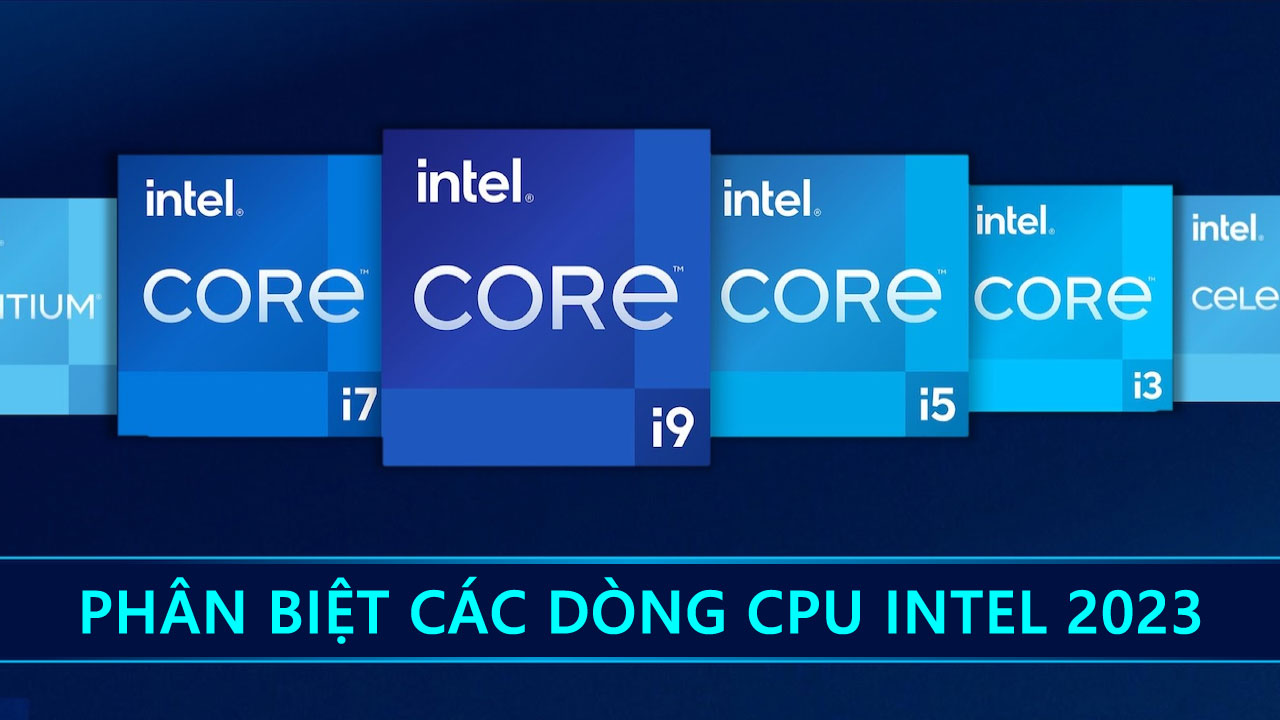
CPU (Central Processing Unit) is the central processing unit of a computer, responsible for processing, calculating data, and running programs. Intel CPU is a high-quality central processor that is always highly rated, manufactured by Intel Corporation. Intel CPUs are widely used in personal computers, laptops, servers, workstations, and other electronic devices. In this article, Hung Phat will provide a detailed guide to distinguishing different Intel CPU lines.
Announcement of the new conventional Intel CPU brand naming method
Intel will introduce a new simplified brand - Intel® Processor - for computers. Starting from 2023, computer products in this segment will be simplified with the Intel® Processor brand, instead of Intel® Pentium® and Intel® Celeron® processors as before.
This new branding architecture will allow Intel to focus on flagship brands such as Intel® Core™, Intel® Evo™, and Intel vPro®, while also helping to optimize branded products across computer segments to enhance and enable communication with customers regarding the value of each product. This new branding architecture is also expected to provide customers with a simplified shopping experience by using a single brand name for multiple processor families.
Intel will continue to provide similar products and benefits across computer segments. The new Intel Processor brand will not change Intel's existing products or their product roadmap.
Understanding Intel® Product Naming Conventions:
- Processor model numbers are just one of several factors - along with processor branding, system configuration, and system-level metrics - that need to be considered when choosing a processor that fits your computing needs.
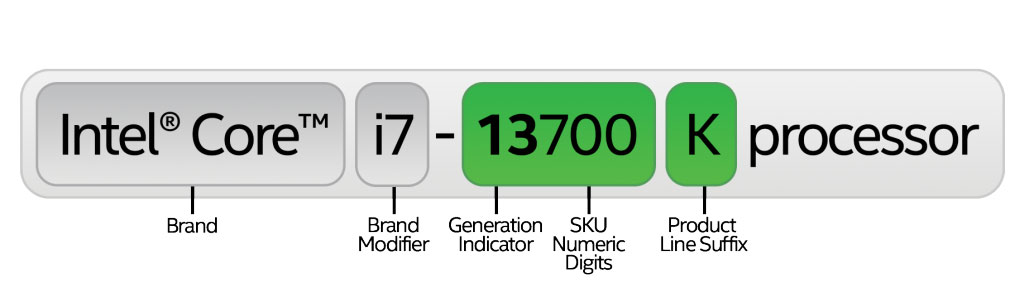
- Distinguish product brands, brand modifiers, generations, SKUs, and different product lines from the Intel® processor name.
- Intel builds specific processors to serve affordable computing, sold under the Intel® processor brand.
 |
BrandIntel's naming system begins with the processor brand - the overall product line for which the processor is created. The most common Intel processor names start with Intel® Core™ or follow the new brand naming convention - Intel® Processor (replacing the Intel® Pentium® and Intel® Celeron® product lines from 2023). Intel® Processor is an economy product line created to serve budget-conscious consumers. Intel® Core™ processors offer faster performance and additional features not found in Intel® Processor models. Intel® Xeon® processors provide higher performance levels for servers and workstations. |
 |
Processor SeriesThe Intel® Core™ processor series includes a brand modifier before the rest of the model number. Intel® Pentium® and Intel® Celeron® processors do not use this naming convention. Today, the Intel® Core™ processor series includes the i3, i5, i7, and i9 brand modifiers. Higher brand modifier numbers provide higher performance levels and, in some cases, additional features (such as Intel® Hyper-Threading Technology). For example: within a specific processor line, an i9 will perform better than an i7, an i7 will perform better than an i5, and an i5 will perform better than an i3. |
 |
Generation ConventionFollowing the brand and brand modifier is the processor generation indicator. Intel® processor generations are identified among Intel® Core™ processor brands, with the generation listed after a hyphen. When a processor has four or five digits, the first one or two digits represent the generation. For example: a processor with the digits 9700 is a 9th generation processor, while a processor labeled 12800 is a 12th generation processor. *Note: Intel® Processor and Intel® Core™ i3 N-series processors will follow the current N-series naming convention which does not include a generation indicator in the model number format. For 10th generation Intel® Core™ processors for mobile devices, Intel's naming scheme will differ slightly, as mentioned later. However, the first two digits in the product number will be 10. |
 |
SKUFor most Intel® processors, the last three digits of the product number are the SKU. SKUs are typically assigned in the order in which processors within that generation and product line were developed. Higher SKUs within the same brand and processor generation will typically have more features. However, the SKU number is generally not the best indicator for comparing between different generations or product lines. |
 |
SKU SuffixThe SKU Suffix is another important indicator of processor capability. These remaining differences are indicated by a letter-based product line suffix. For example: in the Intel® Core™ processor line, U denotes a processor designed for energy-efficient laptops or 2-in-1 computers. Meanwhile, XE denotes an "Extreme Edition" processor for desktops designed for maximum performance. |
Latest Intel® Core™ Processors (10th-13th Gen)
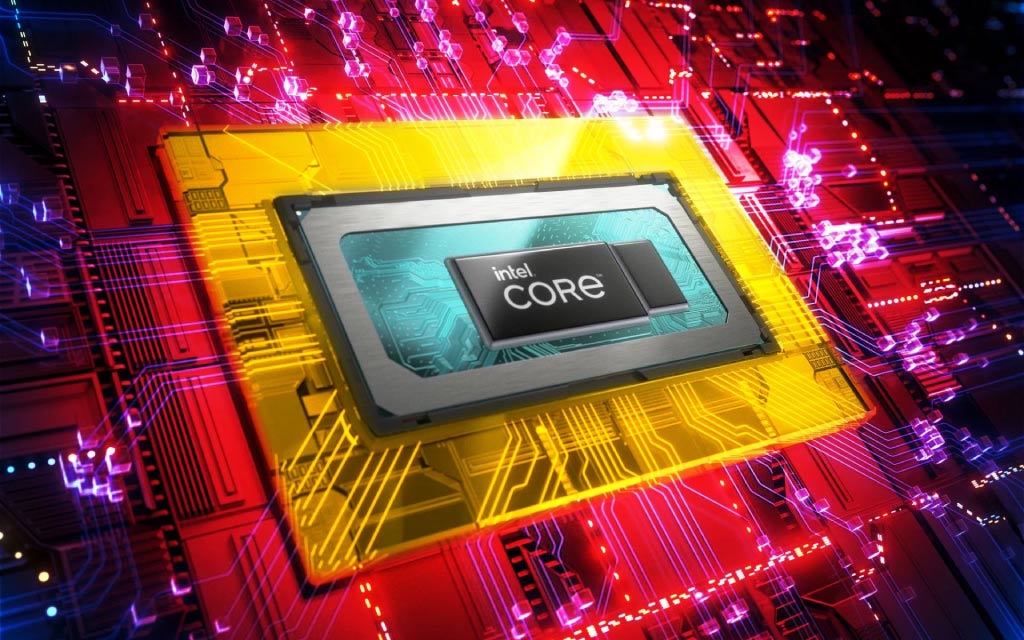
13th Gen Intel® Core™ CPU
13th Gen Intel® Core™ CPUs enhance the architecture by combining performance with up to 8 P-cores and 16 E-cores, providing a superior creative and gaming experience. These processors offer a highly flexible architecture and industry-leading tools for optimizing performance.
For more information, visit the 13th Gen product page.
12th Gen Intel® Core™ CPU
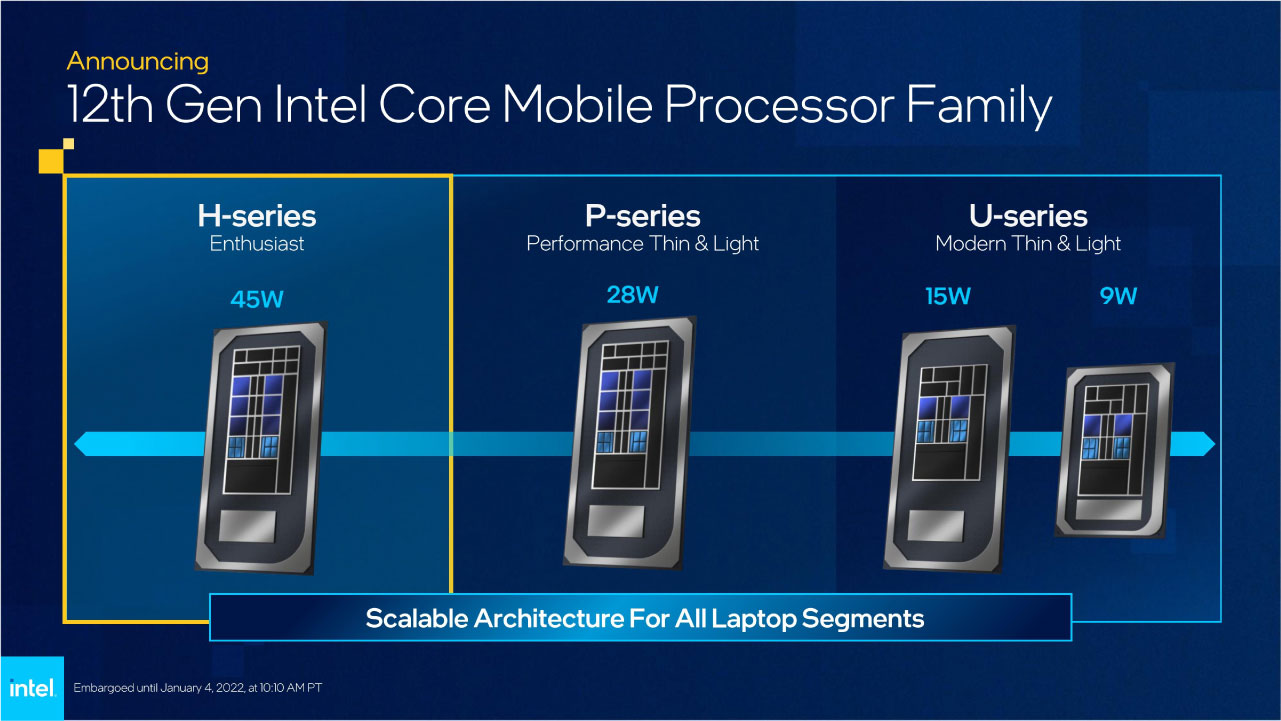
12th Gen Intel® Core™ CPUs introduced a hybrid architecture that brings superior performance where you need it most. They combined Performance-cores and Efficient-cores to enhance gaming, productivity, and creative capabilities.
For more information, visit the 12th Gen page.
11th Gen Intel® Core™ CPU
11th Gen Intel® Core™ CPUs introduced core and graphics architecture with IPC increases that enable AI-accelerated tasks, best-in-class wired and wireless connectivity, as well as advanced tuning features to increase performance so you can do more.
For more information, visit the 11th Gen page.
10th Gen Intel® Core™ CPU
10th Gen Intel® Core™ CPUs balance frequency, cores, and threads to support advanced tuning, while fast connectivity helps improve the experience and productivity for gamers, content creators, and mainstream users.
For more information, visit the 10th Gen page.
Intel Processors
Intel is introducing a new processor brand for the entry-level computing space: Intel® Processor. While current Intel Pentium® and Intel Celeron® products will still be manufactured, Intel Processor will replace Intel Pentium® and Intel Celeron® in the new product group starting from 2023. In the naming convention, "Intel® Processor" is followed by an alphanumeric prefix indicating the series, followed by 3 digits. Intel® Processors follow the current N-series naming convention which does not include any generation indicator in the model number format.
General format: Intel® Processor N###. An example of this format is the Intel® Processor N200.
*Note: The alphanumeric prefix of Intel® Processors will start with the letters N or U. Additionally, Intel® Processors also include other variants outside the N-series processors.
Intel® Pentium® Processors
The Intel® Pentium® Silver naming convention consists of a single-letter prefix followed by a four-digit SKU number. On the other hand, Intel® Pentium® Gold processors do not have a letter prefix and instead contain an SKU number followed by a suffix.
Higher model numbers in a class or processor line indicate improved features and functional standards, including cache, clock speed, or front bus. Intel® Pentium® Gold and Silver processors are distinguished by overall CPU performance. Intel® Pentium® Gold processors are optimized for performance, while Intel® Pentium® Silver processors are optimized for cost.
View Intel® Pentium® processors ›
Intel® Celeron® Processors
Intel® Celeron® processor naming conventions include two different formats. Some Intel® Celeron® processors have a three-digit SKU without a prefix in alphabetical order. Others include a single-letter prefix followed by a four-digit SKU number.
Higher model numbers in a class or processor line typically indicate improved features and functional standards, including cache, clock speed, or front bus.
View Intel® Celeron® processors ›
Intel CPU Suffixes
| MODEL/FUNCTION TYPE/SEGMENT | SUFFIX | OPTIMIZED FOR/DESIGNED FOR |
| Desktop | K | High performance, unlocked |
| F | Requires discrete graphics | |
| S | Special edition | |
| T | Power-optimized style | |
| X/XE | Highest performance, unlocked | |
| Laptop (2 in 1 Laptop) | HX | Highest performance, all SKUs unlocked |
| HK | High performance, unlocked | |
| H | High performance | |
| P | Performance for thin and light series | |
| U | Power efficiency | |
| Y | Ultra-low power efficiency | |
| G1-G7 | Graphics level (processors with newer integrated graphics technology) | |
| Embedded | E | Embedded |
| UE | Power efficiency | |
| HE | High performance | |
| UL | Energy saving, in LGA package | |
| HL | High performance, in LGA package |