


When a process involves handling thousands of tasks, choosing the most powerful AI model is not necessarily the most reasonable option. Choosing the right Claude model should be based on difficulty, frequency, and the volume of text or source code required. Making the wrong choice can increase costs without a corresponding improvement in quality. The four current commercial Claude models are designed for different needs, rather than being ranked in a simple hierarchy of high to low.
What is Claude and why has the way we choose models changed
Claude is a group of commercial AI models developed and operated by Anthropic. The current lineup includes four versions: Haiku 4.5, Sonnet 5, Opus 5, and Fable 5. These four models form a toolkit spanning many work segments, from small repetitive tasks to long, complex processes.
The old way of choosing often placed one flagship model at the center and funneled all tasks into that single choice. This approach is no longer optimal since each Claude model is priced and fine-tuned specifically for the multi-step workflows of AI agents. You can refer to the Claude homepage to understand the product context.
The most premium model is not always the most logical choice. Using an expensive model for a quick summarization request will waste budget. Conversely, a low-cost model will struggle to handle complex, multi-day construction workflows. The key is to match the right capability with the difficulty of each task.
Key capabilities of the four current Claude models
Haiku 4.5 is the lowest-cost and fastest version in the lineup. Anthropic designed this model to handle large workloads, making it suitable for simple but frequent repetitive tasks such as support ticket classification, data extraction, or format standardization. Haiku 4.5 supports a 200,000 token context window and costs approximately 1 USD per 1 million input tokens at the standard rate.
Sonnet 5 is the flagship model, balancing speed and intelligence for most daily needs. This version features a context window of up to 1 million tokens, supporting programming, drafting, and agentic tasks in Claude Code. The standard input price for Sonnet 5 is around 3 USD per 1 million tokens, which is about 40 percent lower than Opus 5 in the same category. You can review the Claude Sonnet 5 launch to understand why this version is highly rated for agentic workflows.
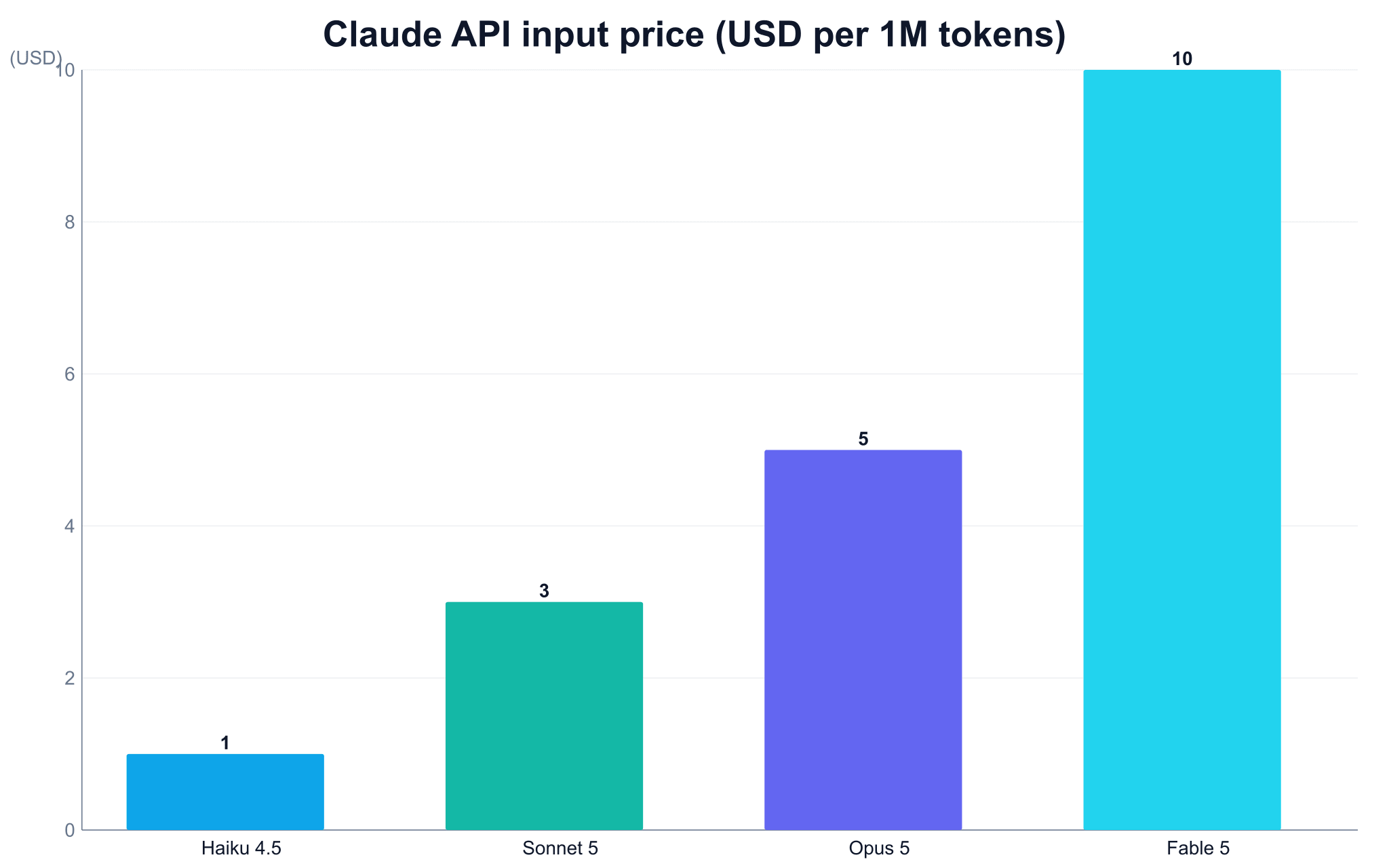
Opus 5 is the model Anthropic recommends for complex agentic programming and enterprise-scale work. This version also supports a 1 million token context window, with a standard input price of approximately 5 USD per 1 million tokens. You should consider Opus 5 when a problem exceeds the capabilities of Sonnet 5, rather than defaulting to it from the start.
Fable 5 is the most capable model in the lineup, aimed at creative thinking and long-term operational agents. This version supports a 1 million token context window and has the highest price point, at approximately 10 USD per 1 million input tokens. Due to the high cost, Fable 5 should only be reserved for tasks requiring the highest levels of quality and creativity.
Practical steps to choosing the right Claude model
You should not start with the version name, but rather with the actual work that needs to be processed. First, clearly define the task, such as support ticket classification, data extraction, summarization, drafting, programming, or multi-step workflow construction. Then, determine if the task is repetitive in large volumes: if the work is simple, occurs thousands of times, and prioritizes speed and cost, Haiku 4.5 is a viable option.
The next step is to check the input data length, as Haiku 4.5 is limited to 200,000 tokens, while Sonnet 5 expands up to 1 million tokens. For most writing, programming, and daily agentic tasks, Sonnet 5 is the practical choice; only when a problem is truly difficult should you upgrade to Opus 5 or Fable 5. Finally, check the reasoning level and usage format before estimating your budget, as the per-token pricing for APIs differs from the pricing structure of subscription plans. For subscription plans, make sure to understand the Claude Pro plan limits to avoid misunderstandings.
Limitations and important notes before use
Haiku 4.5 has advantages in speed and cost, but it is not suitable for deep reasoning or production-level source code. You need to clearly distinguish between simple verification tasks and workflows that require multiple steps and high output quality to avoid assigning heavy tasks to a model optimized for high volume.
Sonnet 5 is suitable for most work, but costs do not only depend on the model name. A more intensive reasoning mode will increase the token count, and when pushing reasoning to the maximum, the actual cost can even exceed Opus 5 for the same task. Therefore, monitoring the reasoning level is as important as choosing the right version.
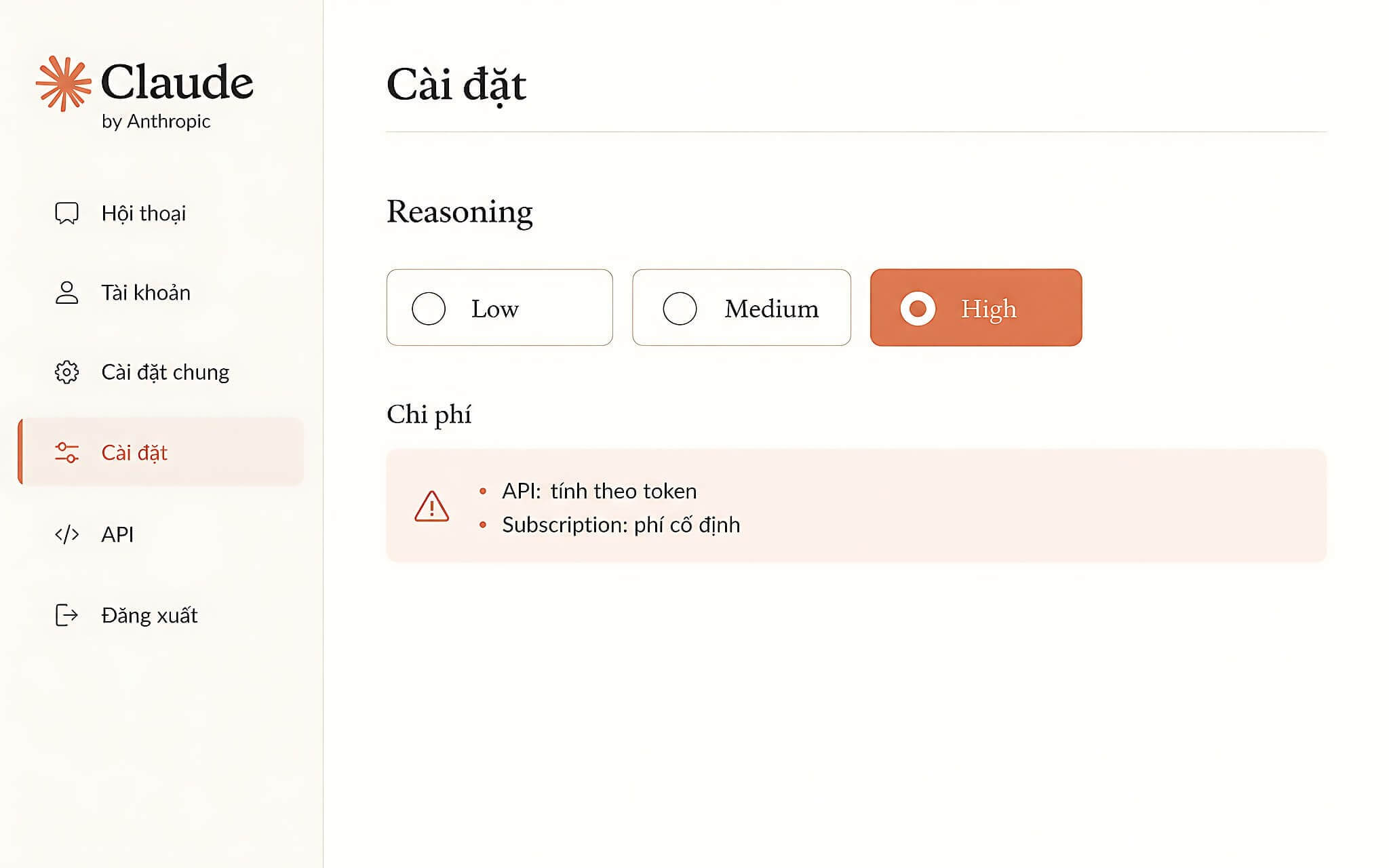
Costs also vary depending on the method of use. Per-token pricing applies to APIs, while subscription plans like Free or Pro charge a fixed monthly fee. You should not use the API unit price to directly derive the cost of a subscription plan, as the two methods serve different needs. The full and updated price list is published at Anthropic's official pricing.
Another note is that the Claude model lineup is continuously updated, often accompanied by limited-time introductory prices. Therefore, you should verify the version, context window, and unit price directly on the official documentation page before making long-term budget plans, rather than relying on outdated figures.
Who should use it and perspectives for Vietnamese users
Haiku 4.5 is suitable for groups needing to process large volumes of small tasks. Businesses or support departments can consider this version for ticket classification, information extraction, and repetitive checks when the requirements do not demand deep reasoning. This is a clear cost-optimization direction for regular operational processes.
Sonnet 5 is a more practical choice for those who need writing, programming, or operating daily agentic tasks. Meanwhile, Opus 5 and Fable 5 are for more specialized problems, where the difficulty or creative requirements truly exceed the capabilities of Sonnet 5. Monitoring the reasoning level remains necessary to control costs for all versions.
For Vietnamese users, the current data primarily helps in considering budgets and types of work; it does not yet include specific evaluations of Vietnamese language quality or listed prices in Vietnam. Claude can replace parts of classification, extraction, formatting, drafting, and programming tasks; if you are interested in how to utilize it, you can see more in our AI prompt writing guide.
The most important rule is not to upgrade based on version order. Use the economical model for simple tasks, choose Sonnet 5 for most work, and only consider Opus 5 or Fable 5 when requirements exceed current capabilities. Matching the right model to the task helps you avoid paying for redundant capability and saves significant costs without sacrificing quality.
Frequently Asked Questions about choosing a Claude model
Which Claude model should I choose for daily work?
For most writing, programming, and daily agentic tasks, Sonnet 5 is the most balanced choice between speed, quality, and cost. You should only downgrade to Haiku 4.5 when the work is simple and repetitive in large volumes, or upgrade to Opus 5 when the problem is truly complex.
Which Claude model is the strongest and which is suitable for complex programming?
Fable 5 is the most capable model in the current lineup, aimed at creative thinking and long-term agents. For complex agentic programming and enterprise-scale work, Anthropic recommends Opus 5 as the more suitable option.