

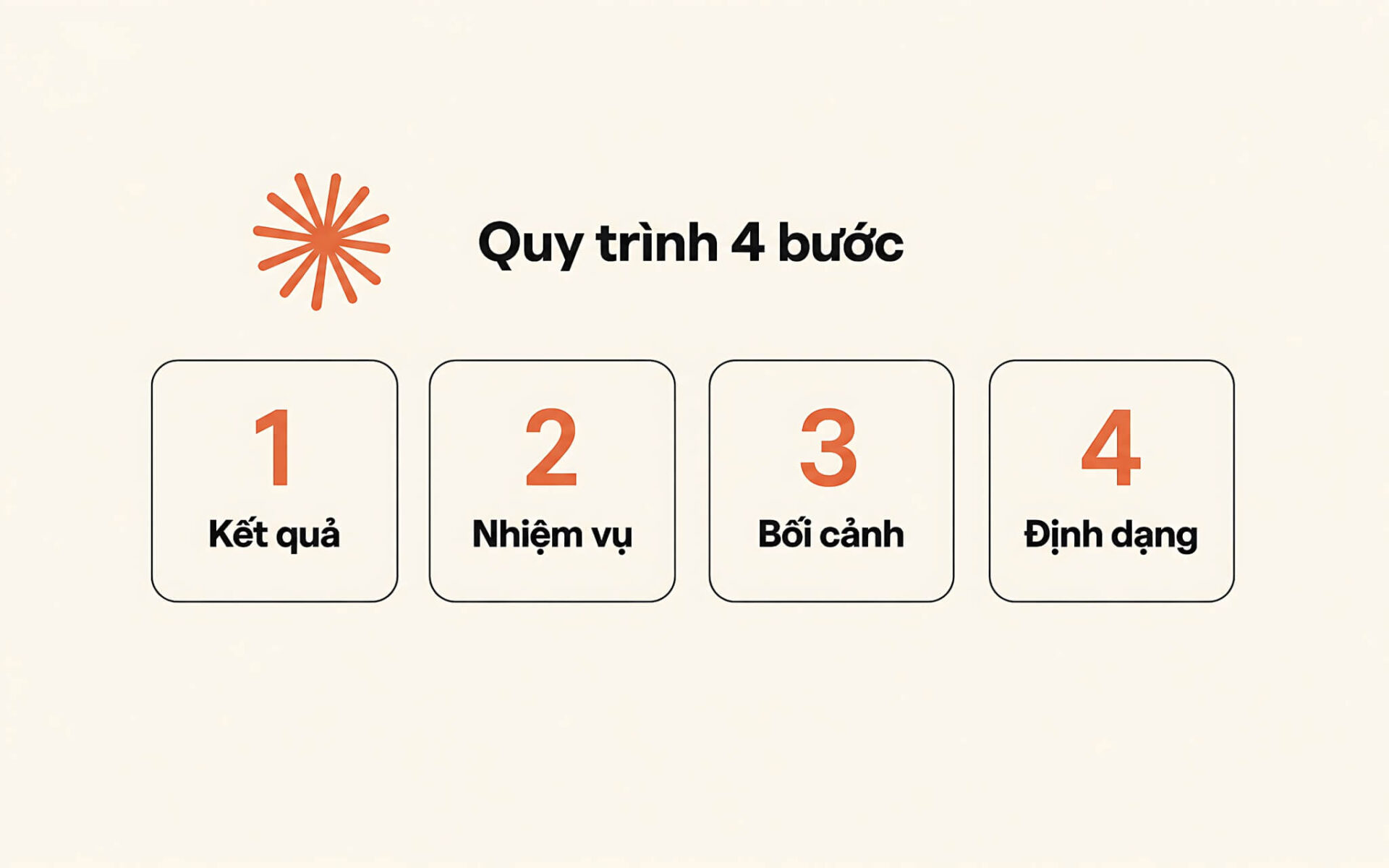
Many people open the chat box and type a single line asking Claude to find customers, only to receive a list of generic tips found anywhere. The command lacks goals, context, and desired formatting, so the system chooses the safest option. Prompt Engineering does not require magical wording; it just requires four groups of data arranged in the correct order. Hung Phat summarizes a 4-step process for building prompt structures based on official Anthropic documentation, which can be applied immediately to your daily work.
How Prompt Engineering differs from casual prompt writing
The habit of opening a chat box and typing a short, one-line request is very common when working with AI tools. Commands like "find customers" or "write ad content" almost never include any data. The returned results are theoretical and identical to what is already on the first page of Google, leading many to prematurely conclude that AI tools are overhyped. The key to prompt engineering lies in the amount of input information, because a question lacking data will struggle to produce an answer that exceeds average quality.
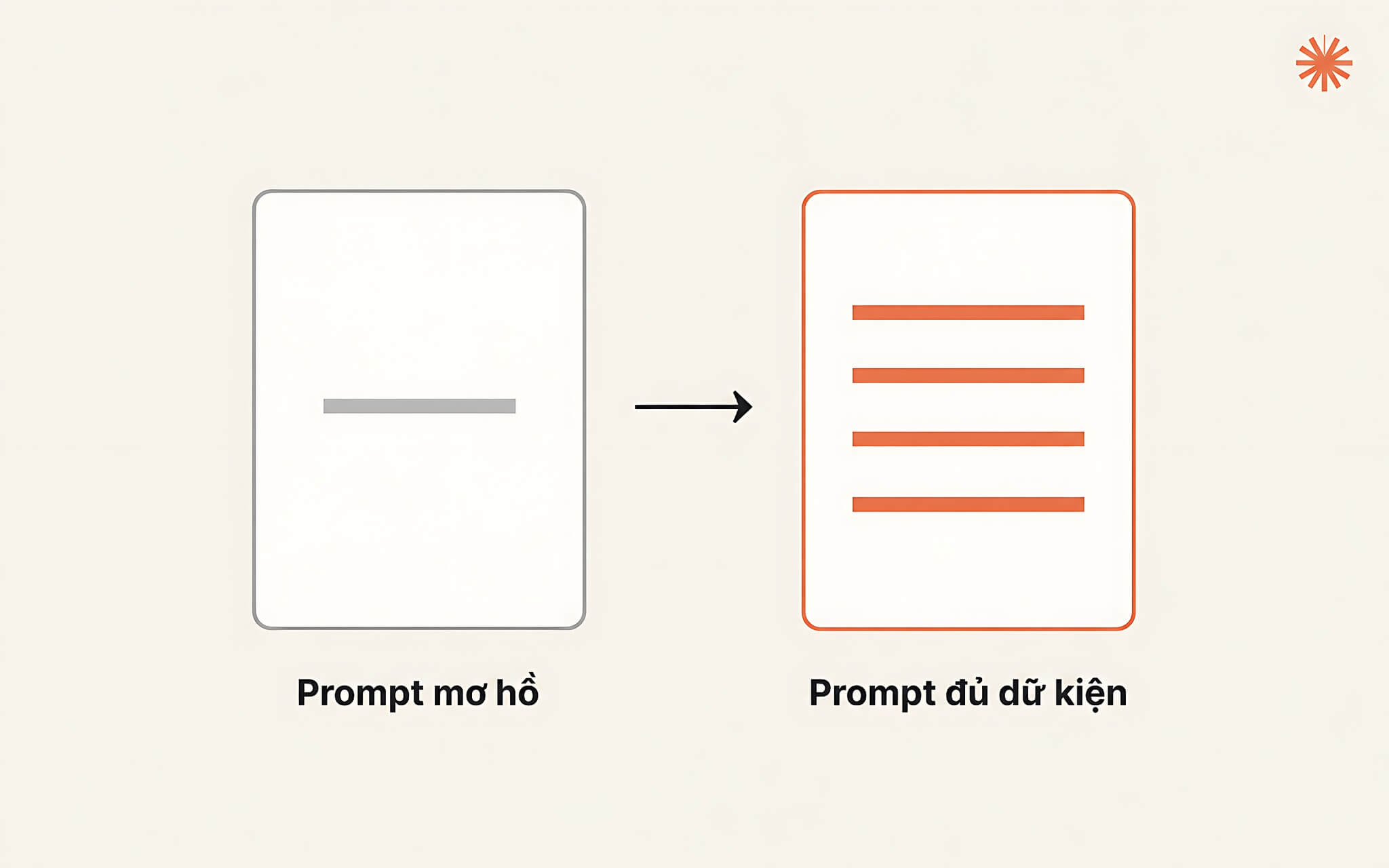
Claude processes information based on the entire conversation. Without a clear goal, business scale, or standards for a good answer, the system only provides general responses to maintain safety. Anthropic's documentation recommends stating the context and the reasoning behind instructions, as the "why" helps the model understand the objective and respond more closely to it. All prompt writing instructions for Claude begin with describing the context. See more on how to choose a Claude model based on your budget.
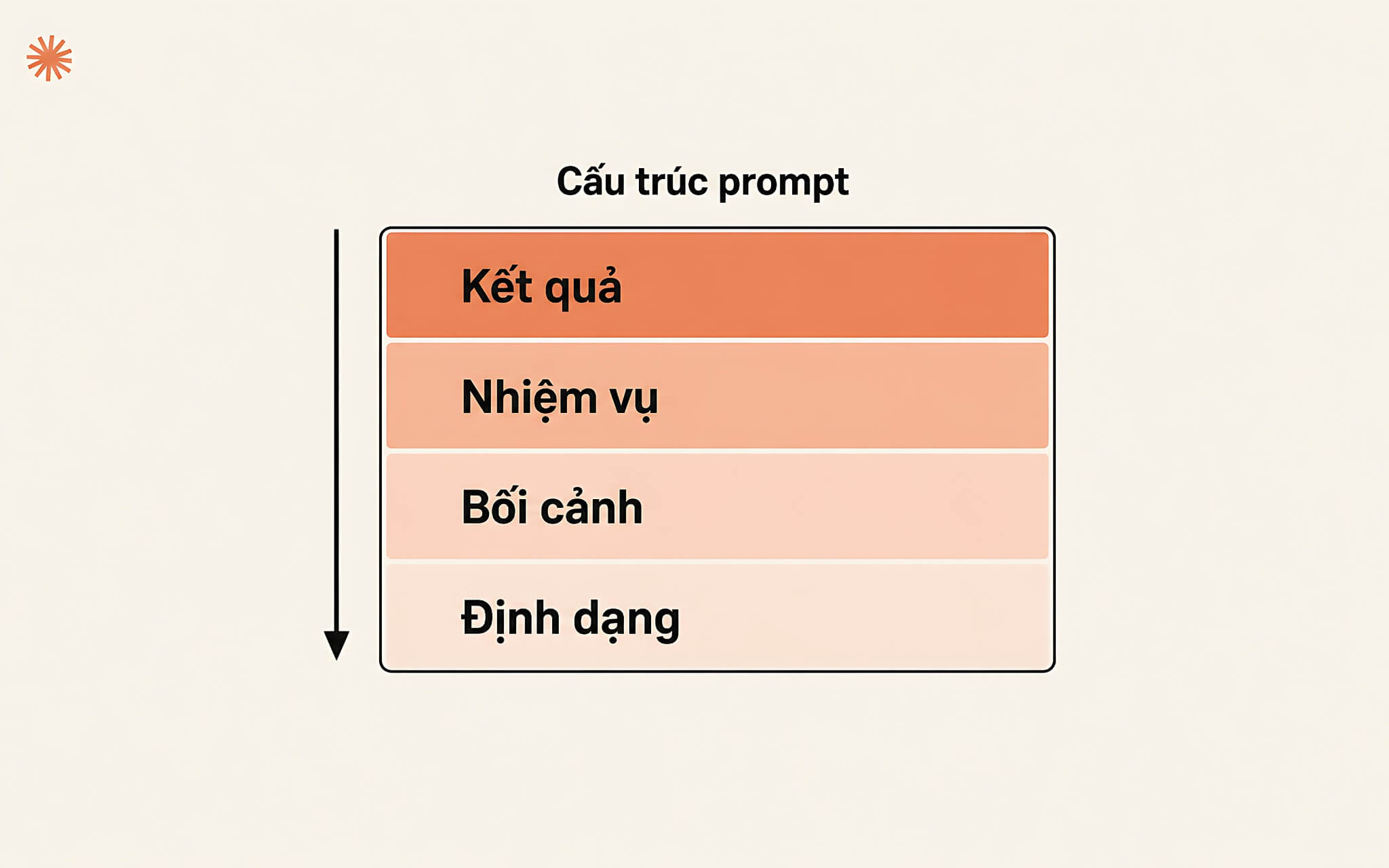
Proper prompt engineering does not rely on mysterious keywords. You provide four groups of data: result, task, context, and format, then arrange them in a logical order. Assigning a role to the model is a valid method and Anthropic suggests placing it in the system prompt; however, a role description cannot compensate for a missing goal. These two layers of information complement each other rather than replacing one another.
Four core components in a prompt structure for Claude
The first component of a prompt structure is the final result you want to achieve, including specific numbers and deadlines. Anthropic recommends stating the context and the motivation behind the instruction, as the reasoning helps the model understand the goal and provide more focused feedback. If you leave this part blank, the tool only completes a technical operation without creating actual value. Refer to Anthropic's prompt writing guide.
The second component is the specific task to be done right now. Official documentation emphasizes clarity and directness, prioritizing step-by-step lists when the order of operations matters. The more specific the task in a Claude prompt, the more realistic the output, avoiding generic advice. Anthropic also suggests a simple test: give the prompt to a colleague with minimal context; if they find it confusing, the model will too.
The third component is detailed context regarding your current situation, including business models, products, and customer segments. Without this layer of information, Claude writes content for any random business, and the tone immediately reveals its lack of depth. For long documents, Anthropic recommends placing reference text at the beginning of the prompt so the model can utilize it more effectively.
The final component in the prompt structure is the output format. Anthropic suggests describing what you want instead of listing what you don't want-for example, requesting a response in seamless prose paragraphs. For multi-layered commands, XML tags like <instructions> or <context> help clearly separate different blocks of information and significantly reduce misunderstandings. A set of sample examples should consist of three to five samples, wrapped in <example> tags so the model can recognize the pattern.
A 4-step Prompt Engineering process applied directly to Claude
The 4-step process for optimizing commands goes from the overall goal down to technical details. Putting the result at the top helps the tool shape the entire processing roadmap, while the format is placed at the end because it only governs the presentation stage. The following four-step Prompt Engineering process is a distillation of principles published by Anthropic, rearranged to suit daily business operations.
You are not required to explicitly label "Result" or "Task" as if filling out a form, although using XML tags is still viable for long commands. Maintaining the correct order of information delivery makes a noticeable difference.
| Step | Action | Data to include |
|---|---|---|
| Step 1 | State the final result and the reason for needing it | Sign 5 new customers at a rate of $2,000 per month before the end of the quarter |
| Step 2 | Assign the specific task to be done right now | Create a list of 50 most suitable potential customers including screening criteria |
| Step 3 | Provide business context | Business model, products, existing customer base, current market competition |
| Step 4 | Finalize the output format | Comparison table with a classification column, one customer per row, with short notes |
This approach is similar to delegating tasks to a new employee. If you only tell them to "write a sales email," you will receive a generic draft. If you clearly state the goal is to "schedule 10 discovery calls with service company owners this month," the quality of the draft changes completely. With the same person writing, the difference lies in the amount of data provided beforehand.
Every time you draft a prompt for Claude, after completing all four steps, you should verify the output by comparing it against the goal stated in step one. If any part deviates, add more data and request a revision rather than rewriting the command from scratch. See more tips on how to time your Claude Pro sessions.
Important notes and limitations when applying the prompt framework
The biggest limitation of this method lies in the preparation stage. If you cannot summarize your desired result in a single sentence, it means your work objective is still vague. The model cannot compensate for that vagueness and will still return off-target answers. A prompt framework helps present your thoughts coherently; it does not make business decisions for you.
You should pause for a moment to confirm your destination before typing a request. Rushing into assigning tasks without clarifying the goal will cause Claude to act passively, merely executing the literal command. The higher the intensity of interaction, the more the value of prompt engineering is revealed.
Specificity is also a core factor. Requesting a list of 50 potential customers with screening criteria will always yield better results than a general request to "find customers." Please note that no prompt framework guarantees absolute accuracy, so the data and figures provided by the model still require your verification. See more on the process of gathering PDF documents with Claude.
Suitable audiences and application directions for Claude prompts
This prompt framework is suitable for anyone using AI to solve real work problems, from business owners and sales personnel to media professionals. Those looking to find customers, draft sales emails, or analyze data will see a clear change in output quality after applying the correct prompt structure a few times.
In the Vietnamese market, Prompt Engineering is highly accessible because it does not require additional software or technical infrastructure costs. You only need to adjust your communication habits; writing in either Vietnamese or English is viable as long as the local business context is clearly described. The Anthropic Prompt Engineering overview lists additional advanced techniques.
Once these four groups of data become a habit, you will save the time previously spent correcting generic answers. That is the true utility of Prompt Engineering-the advantage comes from the input preparation stage, not from a "lucky" command. The habit of writing prompts with sufficient data is what creates the difference. Therefore, prompt engineering should be maintained as a fixed command optimization process.